Every business owner has had that moment of checking the bank balance and wondering where all the money went, even though sales looked solid on paper. More often than not, the answer isn’t a sales problem. It’s a collections problem. Invoices go out, customers say they’ll pay “soon,” and thirty days quietly turns into ninety. For small businesses, that gap between billing and actually getting paid can be the difference between comfortably covering payroll and scrambling to cover it.
Accounts receivable management sounds like a back-office task, but it’s really a growth lever. Get it right and cash keeps flowing steadily into the business. Get it wrong and even profitable companies can find themselves short on cash at the worst possible time. Businesses working with a dedicated accounts receivable service tend to notice this shift firsthand, once someone is watching the process daily instead of squeezing it in between other tasks, payments simply start moving faster. Whether a business handles AR in-house or hands it off, though, the same core practices apply. Here’s what actually works.
Set Payment Terms That Are Clear From Day One
A lot of collection problems don’t start with a slow-paying customer. They start with vague terms nobody bothered to clarify. “Net 30” means little if it isn’t written on the invoice, agreed to before the work started, and reinforced when the relationship begins. Businesses that spell out due dates, late fees, and accepted payment methods before the first invoice goes out tend to get paid faster, simply because there’s no ambiguity for a customer to hide behind.
It also helps to tier terms based on the customer. A new client with no payment history is a different risk than a long-standing account that has paid on time for three years straight. Some businesses offer shorter terms, say 15 days instead of 30, to new customers until trust is established. Small adjustment, but it protects cash flow while the relationship proves itself.
Get Invoices Out the Same Day, Not “By Friday”
This one sounds almost too simple, but it’s one of the biggest levers in collections. Every day an invoice sits unsent is a day added to how long the money takes to arrive. Businesses that invoice within 24 hours of delivering a product or service tend to collect noticeably faster than those who batch invoices weekly.
Accuracy matters here too. An invoice with the wrong amount, a missing PO number, or unclear line items gives the customer a legitimate reason to delay payment while it gets “sorted out.” That delay alone can eat up a week or more before anyone even realizes there’s an issue.
Build a Follow-Up Cadence and Actually Stick to It
Most businesses know they should follow up on unpaid invoices. Few actually do it on a schedule. A reminder a few days before the due date, a polite nudge the day it’s due, and a firmer follow-up a week past due tends to work far better than one aggressive email sent a month later.
The tone matters as much as the timing. Early reminders should read as informative, not accusatory. As invoices age past 30 or 60 days, the tone can shift to something more direct, but it should still stay professional. Customers are far more likely to prioritize a vendor who’s polite but reliable about following up than one who goes silent for weeks and then fires off an angry email.
Know Who You’re Extending Credit To
Extending payment terms is, in effect, extending a short-term loan. Running a basic credit check or asking for trade references before agreeing to 30, 60, or 90-day terms with a new customer is simply good practice, especially in industries with historically slow payment cycles, construction and government contracting being two common examples.
For existing customers, keeping an eye on payment patterns works just as well as a formal credit check. A customer who’s slipped from paying in 20 days to 45 days over the last two quarters is signaling something, and it’s worth a conversation before the next invoice goes out, not after it’s overdue.
Make It Easy to Pay, Not Just Easy to Bill
Plenty of businesses put real effort into invoicing but overlook the payment step itself. If the only option is a mailed check, that’s an easy excuse for delay. Offering ACH, credit card, and online payment links removes friction and shortens the time between invoice and payment. Card processing comes with a fee, sure, but for many businesses that cost is worth it against the alternative of chasing payments for weeks.
Review Aging Reports Like They Matter, Because They Do
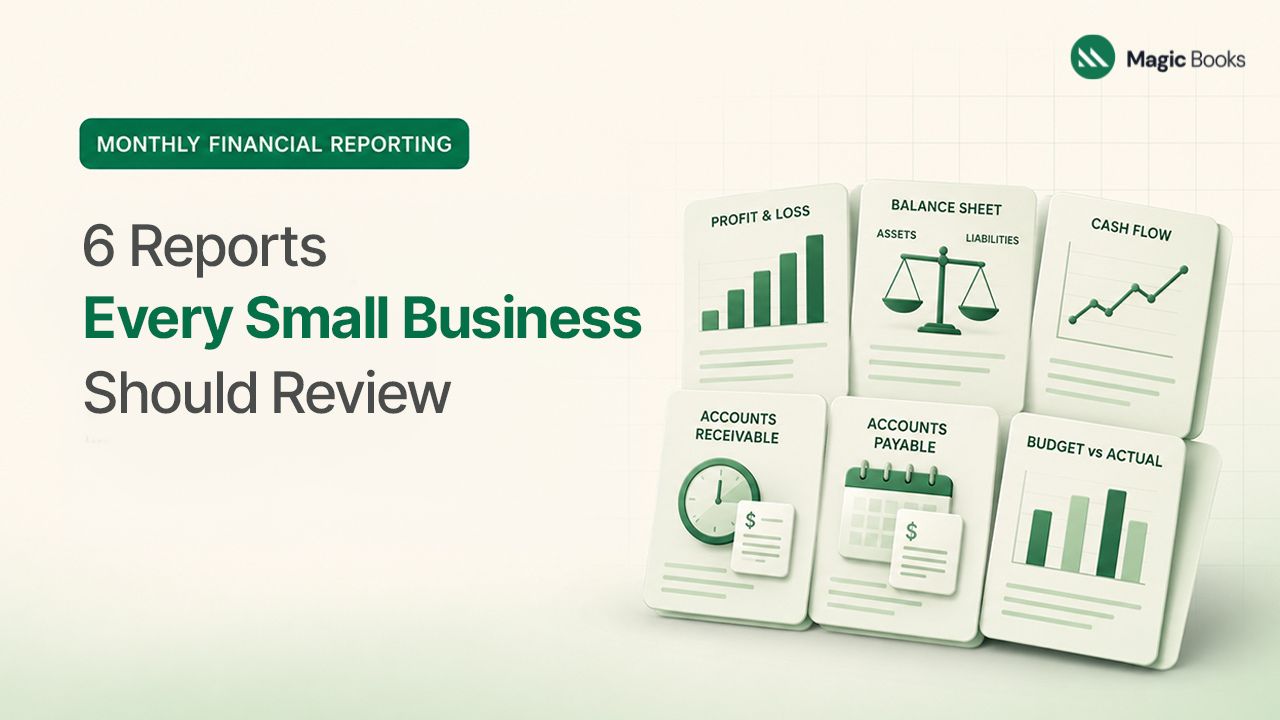
An aging report breaks down exactly which invoices are current, and which are 30, 60, or 90-plus days overdue. Reviewing this weekly, not just at month-end close, gives a business the chance to catch a slipping payment before it turns into a real problem. Waiting until the books close each month to notice a customer is 75 days late means a lot of lost time that could have gone into actually collecting.
Put Internal Controls Around the Process
Collections tend to fall apart when ownership is unclear. Maybe the office manager sends invoices, sales handles follow-up calls informally, and nobody owns the escalation schedule. Strong financial controls fix this by assigning clear responsibility: who invoices, who follows up, who escalates, and on what timeline. Without that structure, even good intentions fall through the cracks the moment someone gets busy, which is most of the time.
Why This Is Harder to Execute Than It Sounds
On paper, none of this is complicated. In practice, staying disciplined about AR while also running the actual business is genuinely hard. Slow seasons make this even more obvious; a temporary dip in revenue hits much harder when receivables are also lagging behind.
This is exactly why many growing businesses eventually move AR out of the founder’s inbox and into the hands of people who do it full time. There’s a real, honest comparison to be made between handling this in-house and bringing in professional support, and for a lot of businesses, the math favors outsourcing sooner than they expect. A dedicated team invoicing promptly, following up on schedule, and watching aging reports every day tends to collect faster than an owner fitting it in between everything else.
The Bottom Line
None of these practices work in isolation. Clear terms mean little if invoices go out late. Fast invoicing doesn’t help if nobody follows up on time. The businesses that collect steadily are the ones treating AR as a system, reviewed regularly and owned by someone specific, rather than something everyone assumes someone else is handling.
For businesses that would rather focus on the work than chase payments, that’s exactly what a dedicated accounts receivable partner is for. Sometimes the fastest way to fix a cash flow problem isn’t a new sales push. It’s simply getting paid for the work already done, faster and more reliably than before.