Roughly four of every five small firms face payments-related challenges. API platforms now provide connections to the vast majority of U.S. small-business banking providers; for example, leading fintech platforms report coverage of business accounts at more than 90% of U.S. banks that serve small businesses.
The purpose of this article is to explain how these automated connections help convert raw financial data into timely, usable actions for small businesses and the advisors who serve them. By adopting secure data feeds, financial professionals can minimize manual data entry and provide highly accurate, actionable insights to their clients. For more on optimizing these processes, you can review this guide on small business cash flow management.
What APIs Do
An API is a secure, automated bridge that allows different software systems to share financial data instantly. This direct connection ensures advisors and business owners always have the timely information required for critical financial decisions, bypassing the need for manual file uploads. You can read more about the technical foundations in this post about API integration in accounting.
How That Data Becomes Actionable
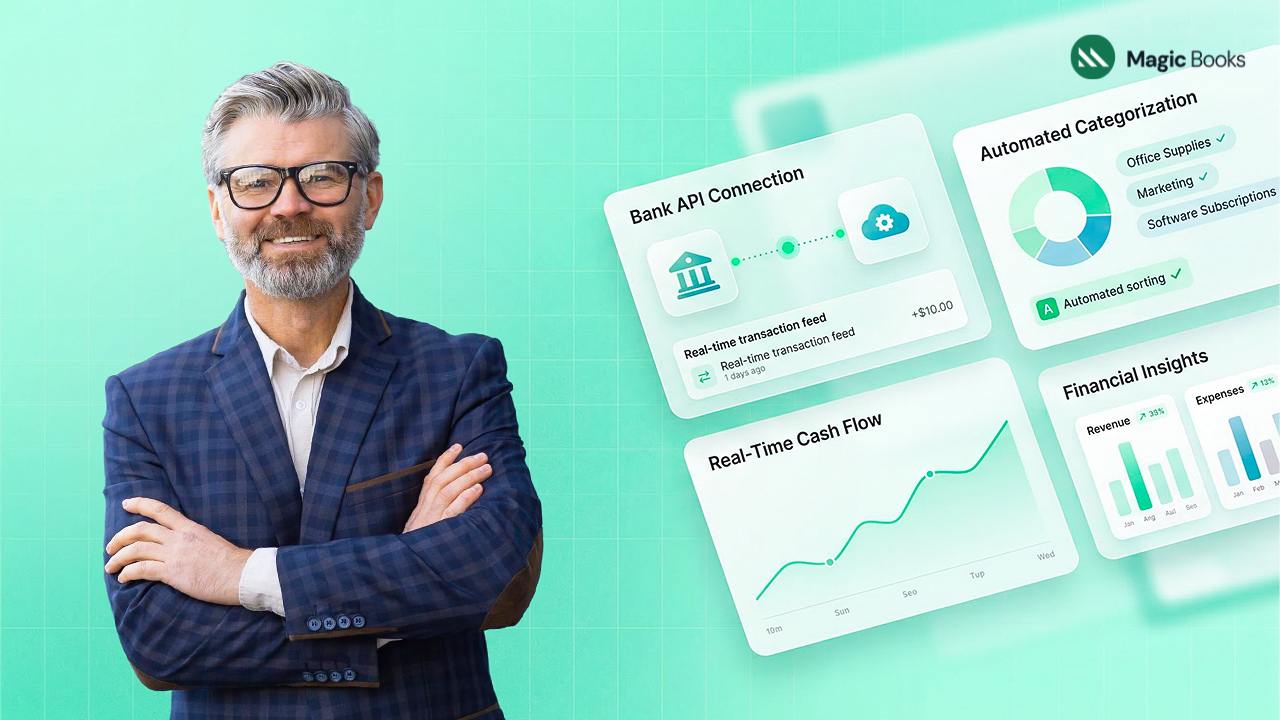
The process begins with automated data capture from a bank or financial institution. Instead of waiting for paper statements or initiating manual downloads, the accounting software connects directly to the bank to securely retrieve daily transaction records. This constant flow of data provides a current, accurate picture of available cash. Reducing the delay in data capture is a primary focus for modern firms, as discussed in our article on reducing manual data entry.
Once the raw data arrives, the system cleans and standardizes it. The software categorizes expenses and income into recognized accounting classifications. This removes inconsistencies and ensures the data matches the firm’s specific ledger setup. This step turns raw, messy transaction strings into organized financial records. Proper tracking is essential at this stage, similar to the methods outlined in our guide on how to track inventory in your bookkeeping system.
Finally, this clean data triggers specific actions within accounting dashboards and reports. Advisors can view real-time balances, automatically update ledgers, and initiate scheduled workflows. This smooth transition from raw numbers to dashboard alerts allows business owners to take immediate, informed action without waiting for the month to end.
Practical Benefits For Small Businesses and Their Advisors
Automated data feeds allow for significantly faster reconciliation and real-time cash visibility. Businesses that utilize these automated bookkeeping connections report improved cash flow management and a sharp reduction in manual data entry errors. According to the Intuit QuickBooks Small Business Data and Index, small businesses increasingly rely on these automated tools to maintain an accurate daily view of their financial health. This reliance highlights the importance of automated bank reconciliation.
Access to daily, standardized data directly improves forecasting for critical obligations like payroll, taxes, and vendor payments. When financial advisors have current information, they can project cash shortages and surpluses with high accuracy. The research firm McKinsey notes that the business value of data sharing via open banking frameworks helps organizations optimize their working capital and fundamentally reduces the frequency of late payments. Proper forecasting also helps firms when managing payroll tax compliance.
Consistent data streams also support smoother loan underwriting and credit decisions. Lenders require accurate, timely financial documentation to assess risk and approve capital requests. Research from the FDIC Small Business Lending Survey indicates that underwriters increasingly rely on timely fintech data feeds to assess small-business creditworthiness. This allows for faster and more reliable capital deployment, a topic covered extensively in our article on improving loan approval odds.
What Advisors, Bookkeepers, and Accountants Should Watch For
Advisors must prioritize data privacy and establish clear client consent protocols. Firms should document specific authorizations for data access and securely retain these records. Professionals must regularly review vendor contracts to ensure compliance with client privacy expectations and industry standards. Establishing these controls early is essential for data privacy for bookkeepers.
Vendor reliability and the extent of bank coverage dictate the practical usefulness of any data integration. It is prudent to check the vendor’s official documentation to confirm they actively support the specific regional banks and credit unions utilized by the firm’s client base. A platform with limited coverage may require falling back to manual processes, which limits the effectiveness of fintech tools for advisors.
While automated categorization is highly efficient, data accuracy remains the advisor’s responsibility. Software can misinterpret ambiguous transactions or assign incorrect tax codes. Bookkeepers should implement regular review workflows to catch and correct miscategorized items before closing the books each month.
Firms should weigh the cost of platform subscriptions against the measurable benefits of reduced manual labor. Advisors can evaluate this by comparing the hourly savings from automated reconciliation against the software’s monthly connection and platform fees. This analysis ensures the technology investment yields a positive return.
Regulatory compliance requires firms to maintain strict record retention and authorization trails for all connected accounts. Professionals should verify that their software vendors provide accessible audit logs and retain records in accordance with federal and state guidelines. It is helpful to flag vendor compliance pages for annual review.
How Implementation Typically Looks
Implementing an automated data feed involves a series of straightforward, practical steps. First, choose a vendor that provides documented coverage for your client’s specific bank set, and verify that data accuracy meets your firm’s standards. Next, secure and preserve the necessary client consent records before establishing the connection. Finally, set up rules for automatic reconciliations and alerts, mapping the incoming reports directly into your existing advisory workflows.
Risks, Controls, and Compliance
While automation reduces manual errors, it introduces distinct security and compliance risks regarding third-party data access. Research from the Federal Reserve and FDIC underscores the necessity of strict vendor oversight when utilizing fintech data connectors. Advisors should require vendors to provide comprehensive audit logging, immutable consent records, and highly encrypted data transmission. Firms should supplement these system controls with periodic manual reconciliations to verify data integrity. For a deeper dive into this topic, refer to our post on secure financial data sharing.
Conclusion and Call to Action
Secure, automated data sharing fundamentally improves how small businesses and their advisors manage cash flow, compliance, and growth. By relying on thoroughly vetted platforms and following regulatory guidance, financial professionals can turn raw transaction data into a strategic, operational advantage. Be sure to consult official vendor documentation and the cited Federal Reserve and FDIC reports to further understand these data workflows.
For small businesses and the advisors who serve them, making financial data actionable is no longer a hope; it’s practical and available today. Learn how to simplify workflows, speed reconciliations, and put timely financial insight to work at magicbooks.
FAQs
How do APIs reduce the time it takes to reconcile bank transactions for a small business?
Data connectors automatically pull transaction data and categorize it consistently into accounting software. This direct feed reduces manual data entry and significantly speeds up monthly reconciliation cycles. Leading platforms like Plaid provide extensive transaction coverage, while data from Intuit shows automated bookkeeping greatly accelerates the financial close.
Can API-based data improve a small business’s chances when applying for loans or lines of credit?
Yes, lenders and alternative underwriters increasingly rely on standardized, recent transaction and cash-flow data delivered via automated feeds to make faster, better-informed credit decisions. According to Federal Reserve and FDIC research on fintech’s role in lending, this continuous data access allows for more accurate risk assessment than traditional paper applications.
What client consent records should advisors require when using a third-party financial data connector?
Advisors should securely store written client authorization, a clear list of the specific accounts shared, timestamps of the consent, and vendor audit logs. Vendor documentation typically describes these consent flows and outlines their internal retention policies for these records.
How accurate is transaction categorization from API providers, and what should bookkeepers do about miscategorized items?
Vendors report high categorization rates, but no automated system is completely perfect. Accountants should routinely verify and correct categories as part of their regular close workflows and manually reconcile any suspicious or unusual items.
Are API connections secure enough for handling client financial data?
Reputable platforms use strong encryption and strict access controls to protect sensitive information. However, advisors must verify vendor security documentation, such as encryption standards and SOC/ISO reports, and review contract terms regarding liability and breach notification.
What operational changes should a bookkeeping firm expect when adopting API data feeds?
Firms should expect much faster data ingestion and a sharp decrease in manual data entry tasks. Advisors will need to add an initial data validation step to their workflows and update client onboarding checklists to document necessary consents and verify bank coverage.
How do APIs help with managing sales tax, payroll, and other periodic obligations?
Automated data feeds supply up-to-date transaction and payroll information that lets advisors run precise, timely calculations. This current data allows for automated alerts regarding tax liabilities and payroll timing, which helps businesses reduce late filings and costly penalties.
What are the main ongoing costs advisors should budget for when using API platforms?
Advisors should budget for typical cost categories, including per-connection fees, monthly platform subscription fees, and occasional remediation costs for data issues. Firms should evaluate these costs by comparing them directly to the labor savings generated by faster reconciliations.
If a client banks with a small or regional bank, will an API provider still connect reliably?
Many platforms prioritize broad bank coverage, but advisors should confirm specific coverage lists before onboarding clients and have a fallback plan for manual data collection if necessary. Plaid reports coverage of more than 90% of U.S. banks that serve small businesses, but verification is still advised.
What documentation should keepers of the client file maintain to satisfy an audit when using API data?
Firms must maintain the unchanged transaction export, vendor logs showing retrieval times, signed client consent records, and all reconciliation worksheets. It is also advisable to keep a brief statement in the client file describing the automation used, and to regularly check vendor retention policies against regulatory guidance.